
This website contains imagery that is only suitable for audiences 18+. Any surgical or invasive procedure carries risks.
Home » Sagging Breasts
Breasts may sit lower over time or following pregnancy or weight loss, with changes in nipple position and fullness at the top of the breast. A downward shift in the breast tissue and nipples is known as breast ptosis. It can affect breasts of different sizes and does not, by itself, mean that treatment is needed.
At COSMEX, we provide breast ptosis treatment through breast lifting, reduction or augmentation with a lift, where appropriate. We assess your breast position, skin quality and volume alongside what you would like to change. Whether you want to retain your current size, add volume or reduce breast weight, we explain the relevant options and their limitations before recommending an approach.
Breast ptosis is descent of the breast tissue and nipple–areola complex, assessed partly by where the nipple sits in relation to the fold beneath the breast. The degree varies from a small change in position to more pronounced descent. Ptosis is a description of breast anatomy and does not, by itself, mean that the breasts are unhealthy or need treatment.
The breasts are supported by the skin and connective tissues around the breast tissue. As this support changes, the tissue may sit lower, and the nipple may move towards or below the breast fold. The degree of descent depends on breast weight, skin elasticity and the changes the breasts have experienced over time.
Factors that can contribute to breast ptosis include:
The position of the nipple is one part of the examination, but it does not give the full picture. We also assess how the breast tissue sits below it, the amount of skin present and the fullness of the upper breast. Measurements of breast width, nipple height and the fold beneath each breast help us distinguish changes in position from changes in volume.
We ask what you would like to change and whether you are satisfied with your current breast size. We also review any previous breast procedures, your medications, general health and nicotine use. Together, these details help us recommend whether a lift, reduction or augmentation with lifting may be appropriate, or whether leaving the breasts as they are would be preferable.








We plan breast ptosis treatment around how far the tissue has descended, the breast volume and the amount of excess skin. Your preference for keeping, increasing or reducing breast size is part of that discussion. These findings help us explain the differences between the following approaches.
A breast lift, or mastopexy, raises and reshapes existing breast tissue without using an implant to add volume. Skin is removed, and the nipple and areola are repositioned where needed. The incision pattern depends on how much lifting and reshaping are required. This option may suit someone who wants to change breast position while retaining their existing tissue, although upper-breast fullness may remain limited.
When the upper breast has lost volume as well as the tissue sitting lower, breast augmentation may form part of a lift procedure. An implant supplies additional volume, while mastopexy addresses the skin and nipple position.
Your surgeon will consider whether these steps should be combined or performed as two separate procedures. We also discuss implant-related complications and the possibility of future replacement or removal before you decide on this approach.
Breast reduction may be considered when the breasts sit lower, and you would also like to reduce their size or weight. The procedure removes some breast tissue and excess skin, then reshapes and lifts the remaining breast. It may also involve reducing the areola. We discuss how much tissue to remove in relation to your anatomy and preferences, although a particular cup size cannot be promised.
The procedure selected for breast ptosis will influence the incision pattern, breast volume afterwards and time needed for recovery. We discuss what to expect at each stage, including the help you may need at home and when you can return to your usual activities.
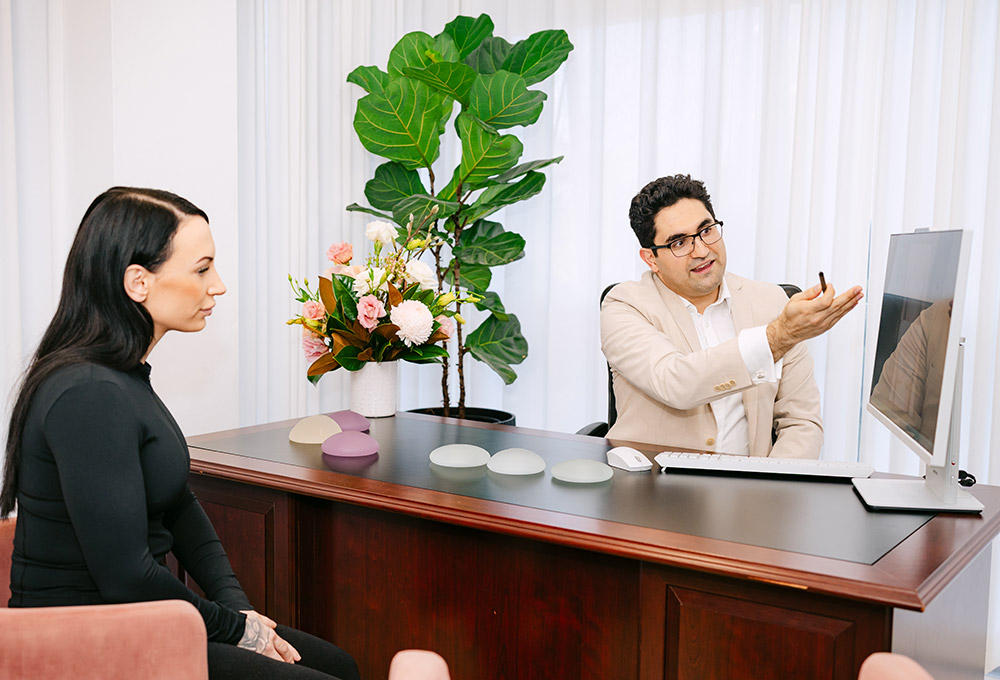
During your consultation, your surgeon will explain where the tissue and nipples sit and what each procedure could change. You can discuss whether you want to keep your current volume and ask about the scars associated with each option. We also cover the potential risks, costs and alternatives, including leaving the breasts as they are.
The procedure reshapes the breast through incisions chosen for the degree of lifting required. These may be around the areola, extend vertically down the breast or continue along the breast fold. Tissue is removed if reduction is planned, or implants are placed if augmentation is included. You will have general anaesthesia in a licensed hospital. Beforehand, we explain whether you are likely to go home the same day or need an overnight stay.
You will need time away from lifting and activities that place strain across the chest. A return to desk-based work may be possible at around two weeks, but a breast reduction, combined procedures or slower healing may require more time. We guide your return to exercise in stages after checking how you are healing. We also advise on the support bra, sleeping position, driving and caring for the incisions as your recovery progresses.
Breast position changes during healing as swelling settles and the reshaped tissue adjusts. The two breasts may settle at different rates, so early differences do not necessarily indicate the final balance. A lift or reduction may raise the tissue and nipples, but it cannot produce identical breasts or stop future descent. Skin quality, breast weight, further pregnancies and weight changes all influence how the result develops over time.
Temporary tenderness, bruising, swelling and altered sensation can accompany breast lifting or reduction. Complications are also possible, including problems with healing and serious surgical risks. We explain these before treatment and discuss any additional considerations arising from previous breast procedures or the use of implants.
Potential complications include:
Deciding how to treat breast ptosis involves more than choosing a lift technique. At COSMEX, we assess your breast position, volume and skin quality, then explain which options may address the changes you have noticed. We talk through the recommendation with you and make time for your questions before you decide whether to proceed.
Our plastic surgeons hold FRACS qualifications in Plastic and Reconstructive Surgery. Their training includes breast lifting and reduction, with attention to tissue support and nipple blood supply. Your surgeon explains how these considerations shape the recommendation and its limitations.
We assess breast position alongside volume and skin quality before discussing a lift, augmentation with lifting or reduction. This helps us recommend an approach that reflects your concerns and preferences, including whether you want to retain or change your breast size.
We perform breast procedures in licensed, accredited Sydney hospitals with qualified anaesthetic teams. Your hospital care is planned around the procedure and your medical needs, including whether you are likely to return home the same day or stay overnight.
At follow-up appointments, we check your incisions, breast shape and nipple position, and advise on activity, support garments and scar care. You can also contact our team between visits with questions about healing or changes you have noticed.
An assessment at COSMEX in Sydney can help you understand the degree of breast ptosis and whether a lift, reduction or another approach may be relevant. To discuss breast position and your treatment options with a plastic surgeon, book online via our website.
Breast ptosis alone is not a disease and does not necessarily cause a health problem. It describes the position of breast tissue and nipples, and treatment is not automatically needed. New breast lumps, skin changes, discharge or unexplained pain should be assessed separately rather than attributed to ptosis.
The degree of ptosis is assessed by comparing nipple position with the fold beneath the breast and the lowest part of the breast contour. Surgeons may describe it as mild, moderate or more pronounced descent. This grading helps describe the anatomy, but we also consider skin quality and tissue distribution when recommending treatment.
Yes. Breast tissue can extend below the fold while the nipple stays above it, a pattern referred to as pseudoptosis. It differs from ptosis involving a lower nipple position, so the approach to reshaping needs to reflect where the tissue and skin excess lie.
Implants alone do not remove excess skin or reliably raise a nipple that sits too low. They may add fullness where volume loss is the main issue, but established tissue and nipple descent may require a lift. Using a larger implant to try to compensate for excess skin can add weight without addressing the underlying position.
No. A breast lift may be considered if you wish to keep your existing volume, while reduction may be relevant if you also want a smaller or lighter breast. The amount of tissue, skin quality and your preferences help determine which approach should be discussed.
No, a standard breast lift moves the nipple and areola while keeping them attached to supporting breast tissue and its blood supply. Some extensive breast reductions may require a different approach. Your surgeon will explain the planned technique and its implications for nipple sensation and breastfeeding before your procedure.
Yes, a further breast procedure may be considered when the natural tissue has descended around existing implants. We need to establish whether the concern involves the breast tissue, implant position, the surrounding capsule or more than one of these. We may discuss a lift, implant revision or removal according to the findings.
Wait until swelling has reduced and breast size and position are more settled before investing in fitted bras. A postoperative support bra will be advised during the earlier stages of healing. Your surgeon can tell you when a bra fitting is appropriate and when underwired styles may be worn again.
Yes. The remaining skin and supporting tissue continue to age and respond to breast weight, pregnancy and changes in body weight. Further descent can therefore develop after a lift or reduction. The procedure changes the existing position, but does not prevent the breasts from changing in the future.
Whether you are exploring surgery, seeking a second opinion, or simply have questions
about the process, our team is here to guide you.
Call now to speak directly with our team and book a consultation.
Complete our enquiry form and our team will be in touch to guide you through your options and answer any questions you may have.
Schedule a no-obligation phone consultation with our patient concierge team, pricing guidance and any questions you may have.
Use the link below to book non-surgical appointments with our cosmetic practitioners.